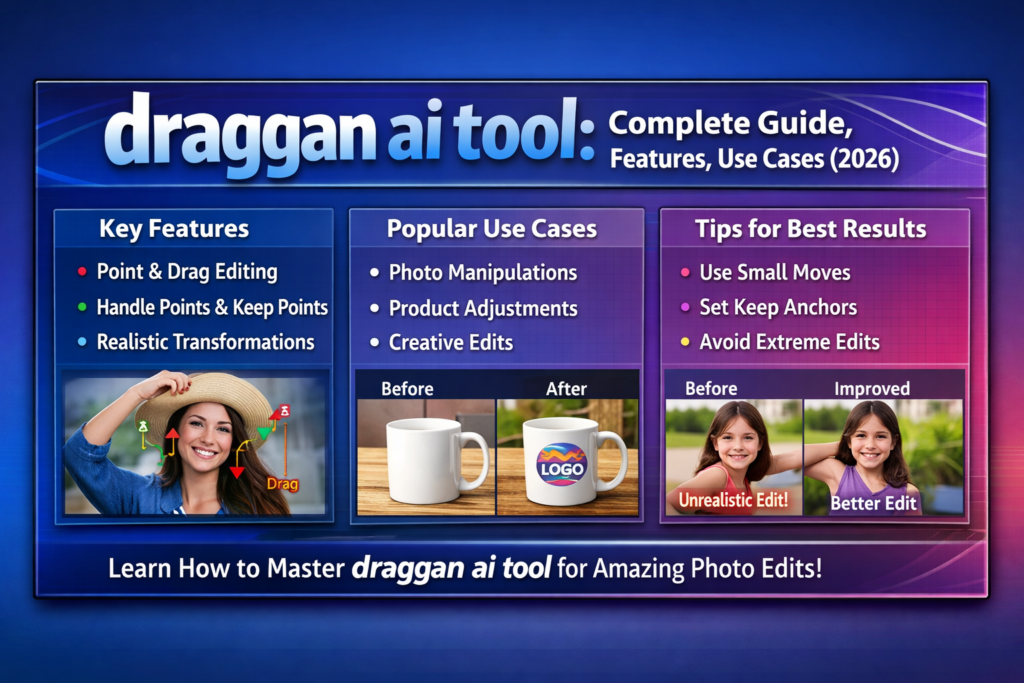
draggan ai tool: Limitations You Should Know
draggan ai tool is strongest for small-to-medium shape edits, not extreme transformations. If you try to rotate a face heavily, stretch an object too far, or force a big pose change, draggan ai. can produce distortions because draggan ai is trying to keep the image “realistic” while the movement becomes unrealistic.
draggan ai tool depends a lot on image quality and structure. Blurry photos, heavy noise, low resolution, and complex textures can reduce accuracy. In those cases, draggan ai may move the wrong region or create artifacts, because draggan ai can’t clearly identify boundaries and stable geometry.
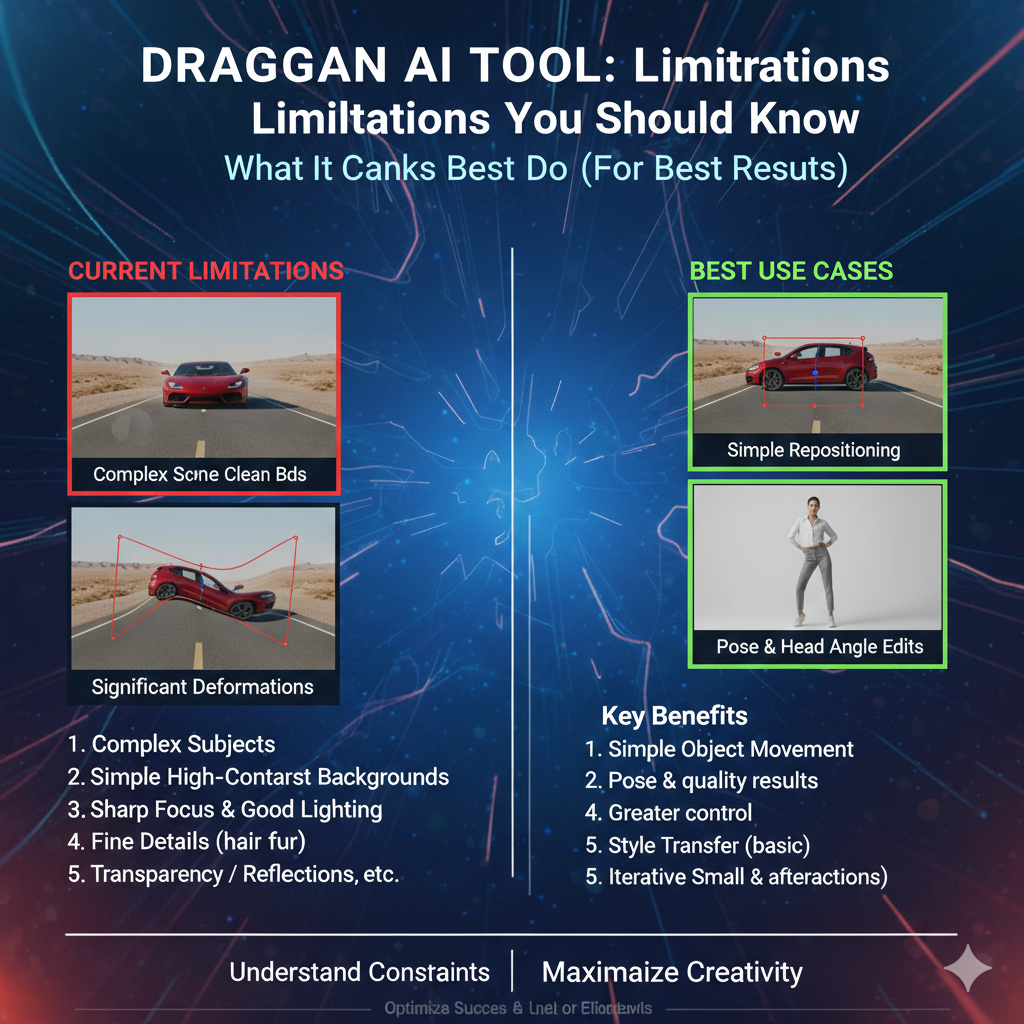
Busy scenes are difficult for draggan ai. If there are multiple faces, overlapping objects, messy hair, patterned backgrounds, or lots of tiny details, draggan ai may unintentionally shift extra areas while you edit one part. This is why draggan ai is more reliable on simple compositions.
draggan ai tool is not a full replacement for traditional editing. Some tasks like perfect background cleanup, advanced compositing, professional retouching, or precise typography fixes still need manual tools. draggan ai is best used as a first-pass shaping tool, then refined if needed.
Availability and consistency can vary. Different demos, repos, or hosted versions of draggan ai may behave differently, support different features (like keep points), or have different performance limits. So when you write your blog, explain that draggan ai results can change based on the setup and the type of image you test.
draggan ai tool doesn’t work equally well on every photo category
draggan ai tool works best on photos with clear structure, so it performs strongest on portraits, single products, and simple objects. In these categories, draggan ai can follow edges like jawlines, eyebrows, corners, and outlines, which makes the draggan ai tool edit look realistic.
draggan ai tool often struggles more with crowded scenes. Group photos, busy street shots, and images with many overlapping objects can confuse what should move and what should stay fixed. In these cases, draggan ai may shift extra areas because draggan ai can’t isolate one subject cleanly.
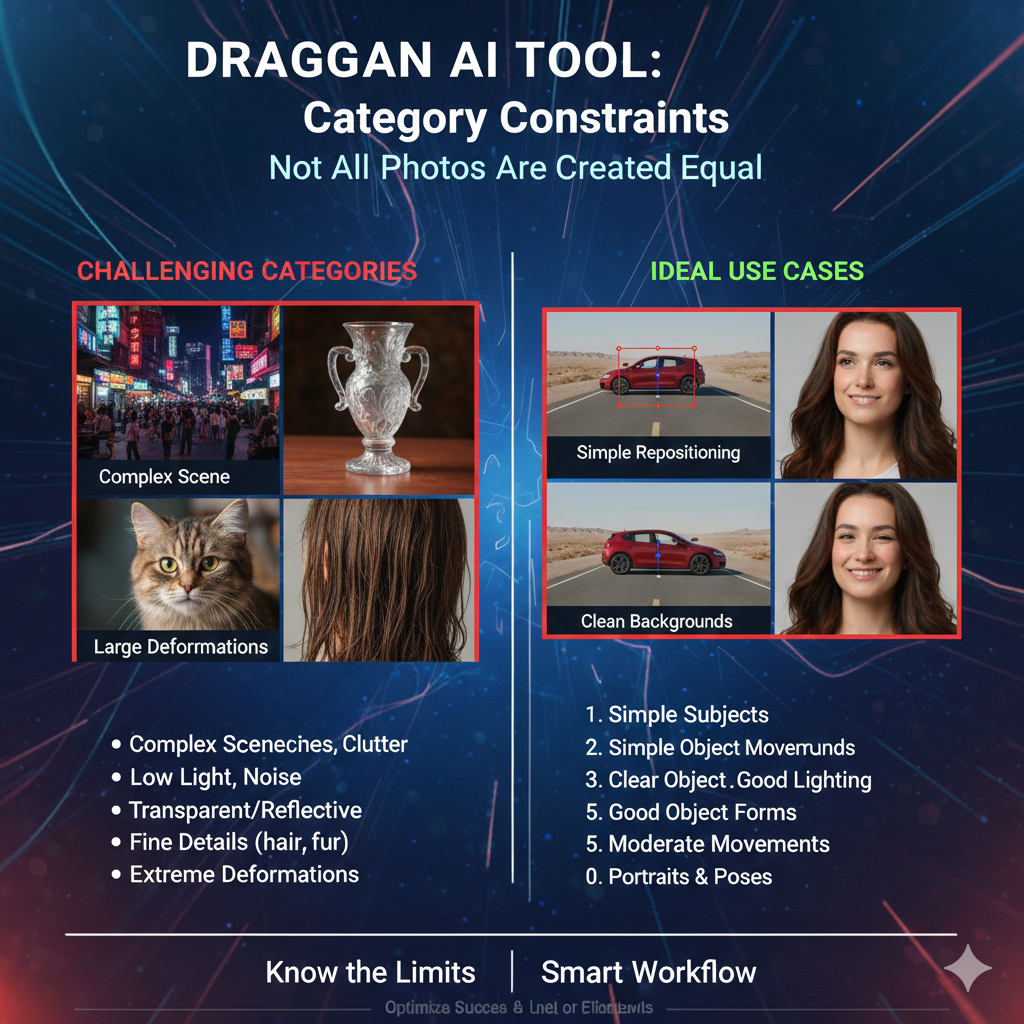
Hair, fur, and highly detailed textures can be tricky for draggan ai tool. If you drag points inside complex texture (curly hair, patterned fabric, fur), draggan ai might create odd stretching or texture artifacts. A better approach is to place points on edges and use small moves so draggan ai tool stays stable.
Background-heavy images are another weak spot for draggan ai tool. If the background has strong straight lines (tiles, railings, text, grids) and you don’t anchor it, draggan ai can bend those lines when you edit the subject. Using keep points helps, but draggan ai tool still works best when the background is simple.
The takeaway is not that draggan ai tool is “bad” for certain photos, it’s that draggan ai tool prefers predictable structure. If you choose the right category, use anchors, and keep movements small, draggan ai can look impressive. If you choose complex categories, draggan ai becomes harder to control.
draggan ai tool artifacts, realism issues, and how to reduce them
draggan ai tool artifacts usually appear as stretched textures, blurry edges, strange skin patterns, or warped background lines. These realism issues happen when draggan ai is pushed too far or when the image structure is unclear, so draggan ai guesses incorrectly while trying to keep the edit realistic.
The easiest fix is reducing drag distance. In draggan ai tool, one big move often creates artifacts, but multiple small moves keep realism higher. If you see a problem, undo, drag only 20-30% of that distance, then repeat. This small-step method helps draggan ai stay stable and improves draggan ai realism.
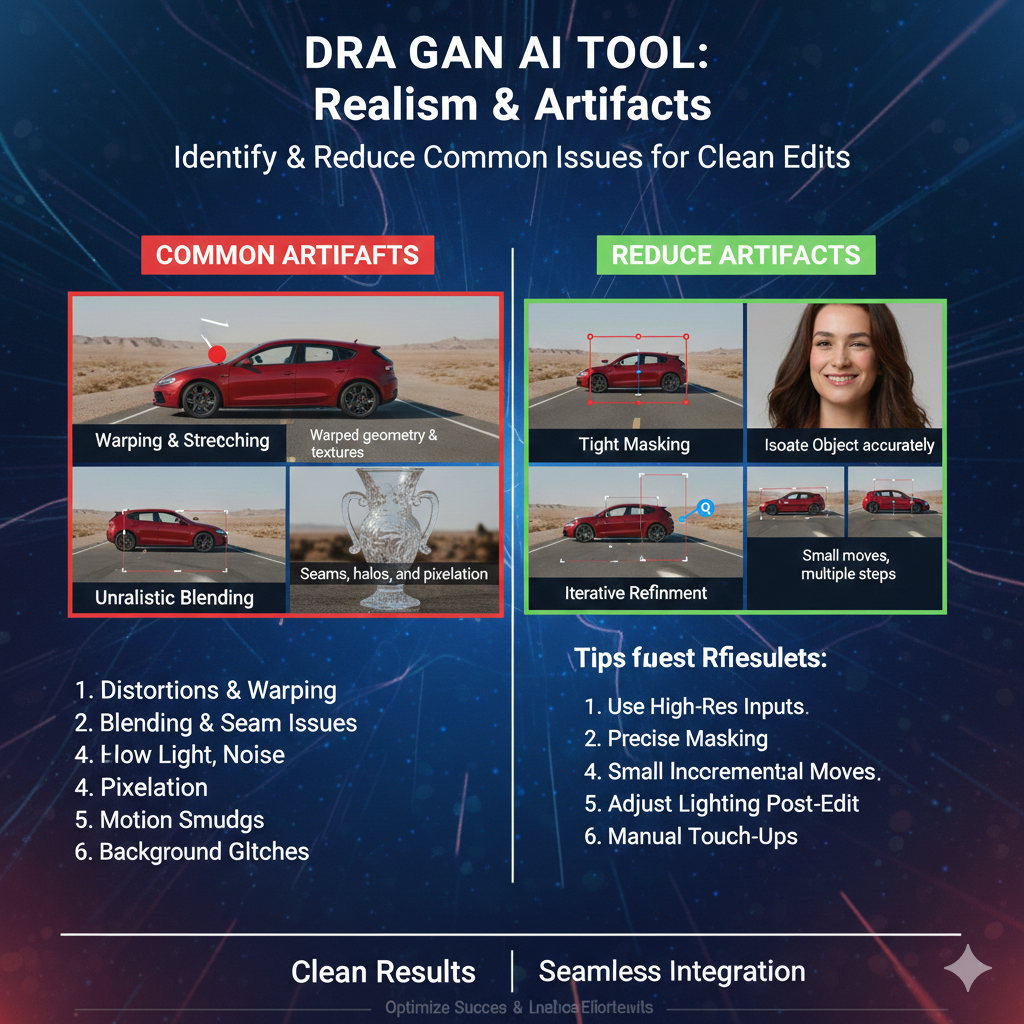
Point placement matters a lot. Put handle points on strong edges, not inside messy textures like hair, fur, or patterned cloth. When points sit on clear boundaries, draggan ai can move the shape cleanly. If the edit looks weird, reposition points closer to the true outline and try again with draggan ai.
Use keep points to protect realism. Add keep points on areas that must stay fixed like eyes, nose bridge, teeth line, logo text, table edges, shadows, or background grids. Keep points act like anchors so draggan ai doesn’t shift the whole scene while you edit one feature, and this reduces draggan ai artifacts.
Choose safer edits for photorealism. draggan ai looks most realistic when the change is physically plausible – small head tilts, mild smile adjustments, slight object repositioning. Extreme pose changes, big rotations, and heavy reshaping are more likely to break realism. If you stay within “natural” moves and iterate, draggan ai can produce clean results with fewer artifacts.
draggan ai tool: Safety, Ethics, and Responsible Editing
draggan ai tool is powerful because it can change real photos in a realistic way, so responsible use matters. Use draggan ai for harmless improvements like composition, product positioning, or creative design variations, not for edits that can mislead people about what’s real.
Be careful with identity edits. With draggan ai, small changes to facial features, expressions, or angles can change how a person is perceived. If you use draggan ai tool on portraits, avoid edits that could manipulate identity, emotions, or meaning in a deceptive way, especially in sensitive contexts.
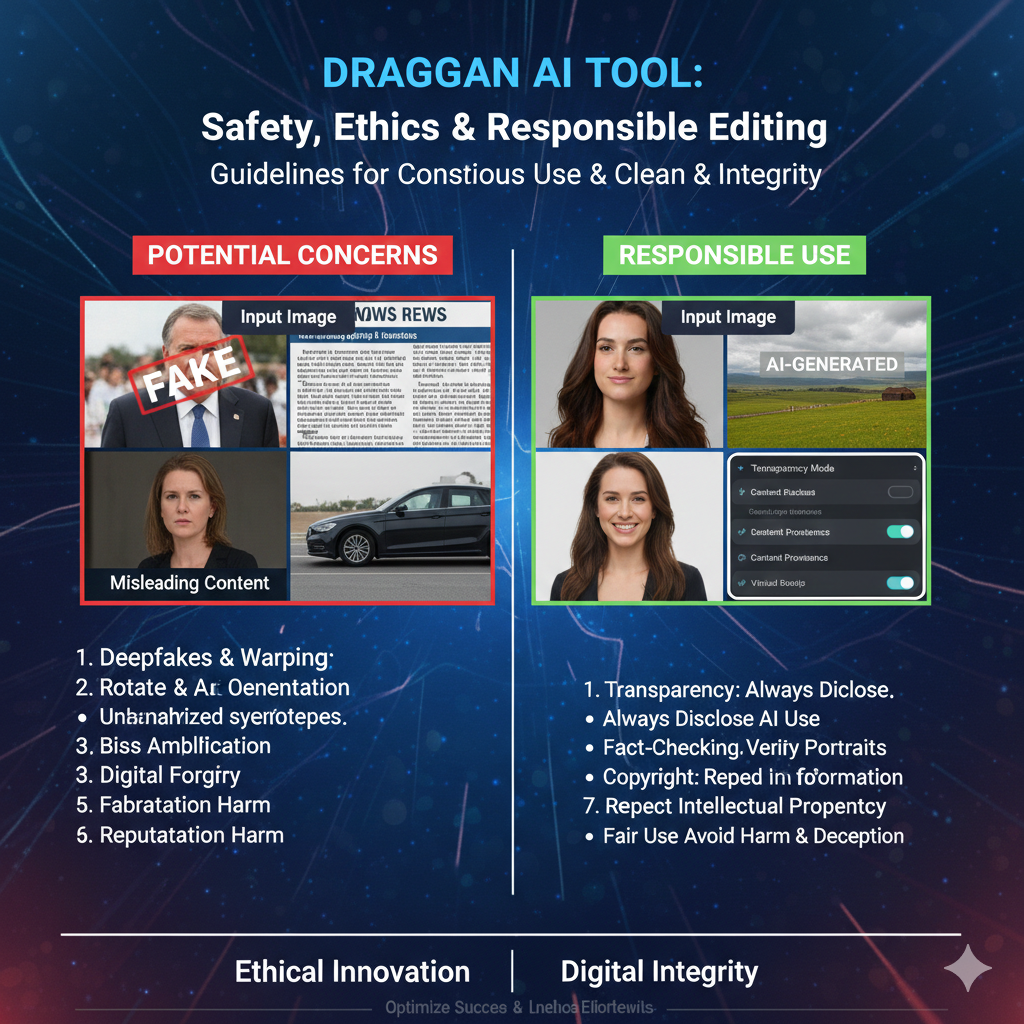
Always respect consent and privacy. If the photo belongs to someone else, don’t edit and publish it without permission. This matters even more with draggan ai tool because draggan ai edits can look “real,” and viewers may assume the edited version is original.
Think about context and disclosure. For marketing creatives, it’s fine to use draggan ai tool to improve product composition or create variants, but avoid edits that misrepresent the product (size, defects, performance). If an edit changes reality in an important way, disclose that the image is edited, even if draggan ai made it look natural.
Follow copyright and usage rights. draggan ai tool does not give you ownership of a random image. Use images you own, have licensed, or have permission to edit. In your blog, you can mention that draggan ai should be used with original photos or properly licensed assets to avoid legal and ethical issues while using draggan ai responsibly.
draggan ai tool: How It Works, Key Features, and Real-World Use Cases
draggan ai tool and identity edits – what to avoid
Avoid using draggan ai tool to change someone’s identity traits in a way that makes them look like a different person. Even “small” edits to jawline, nose shape, eye shape, or face proportions with draggan ai can cross the line from enhancement to identity manipulation.
Avoid using draggan ai tool to create misleading emotions or expressions (fake smile, anger, fear, crying) to change the meaning of a photo. If the purpose is to influence how viewers feel about someone, that’s a risky use of draggan ai.
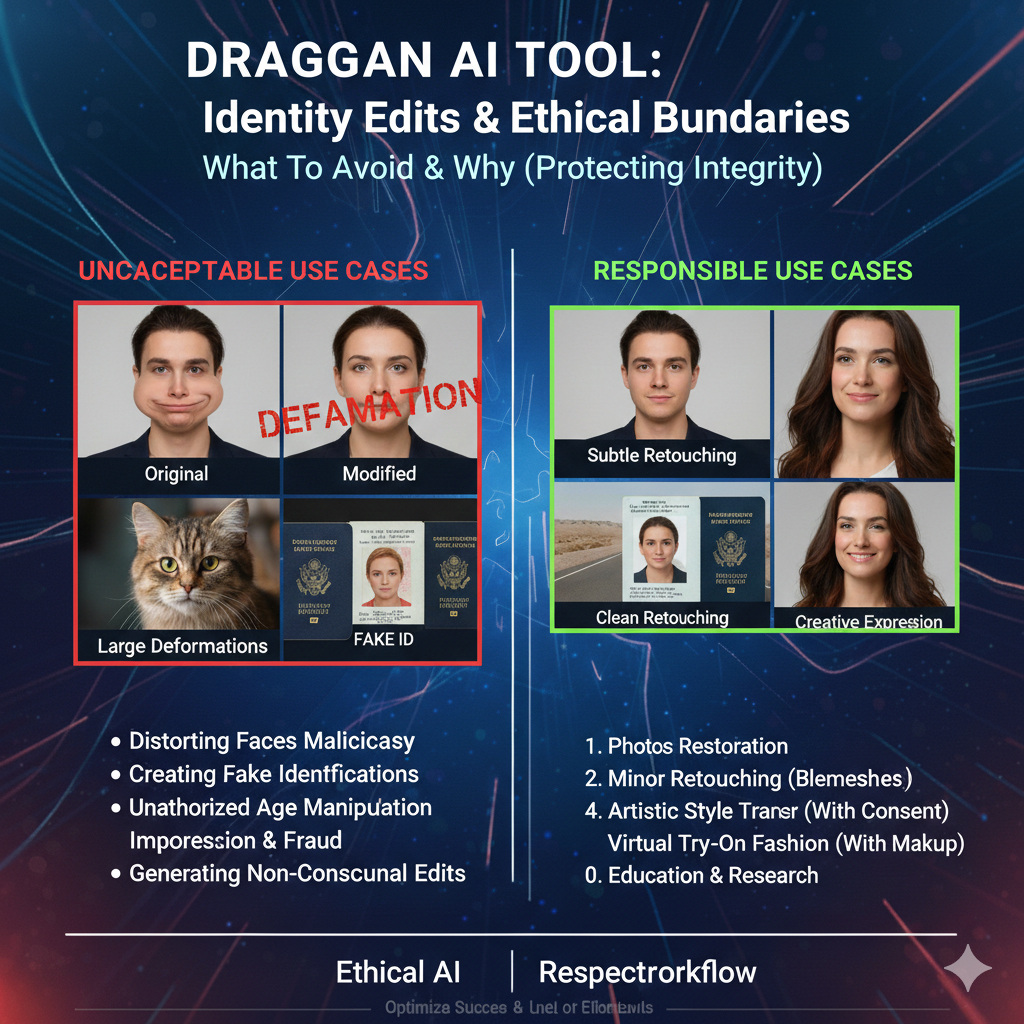
Avoid using draggan ai on real people’s photos without clear permission, especially when the edited image will be posted publicly. With draggan ai tool, edits can look real, so consent becomes more important, not less.
Avoid using draggan ai for impersonation or credibility hacks, like making someone appear present at an event, altering a screenshot-style image, or changing a face to match a narrative. These uses of draggan ai can be harmful because they can mislead viewers.
Avoid using draggan ai tool to “beautify” in a way that sets false expectations, especially for ads, portfolios, or before-after content. If draggan ai changes key facial features or removes defining marks to the point it’s no longer an honest representation, don’t publish it as a real look.
draggan ai tool copyright and usage rights (practical checklist)
Use images you own or have permission to use: Before editing with draggan ai tool, confirm you took the photo, created the image yourself, or have written permission from the owner. If you don’t have rights, don’t edit or publish it using draggan ai.
Check the license type (if you didn’t create it): If you’re using stock images, read the license terms (commercial use, attribution, editing allowed). Even if draggan ai makes a new-looking result, the original license still applies to the draggan ai output.
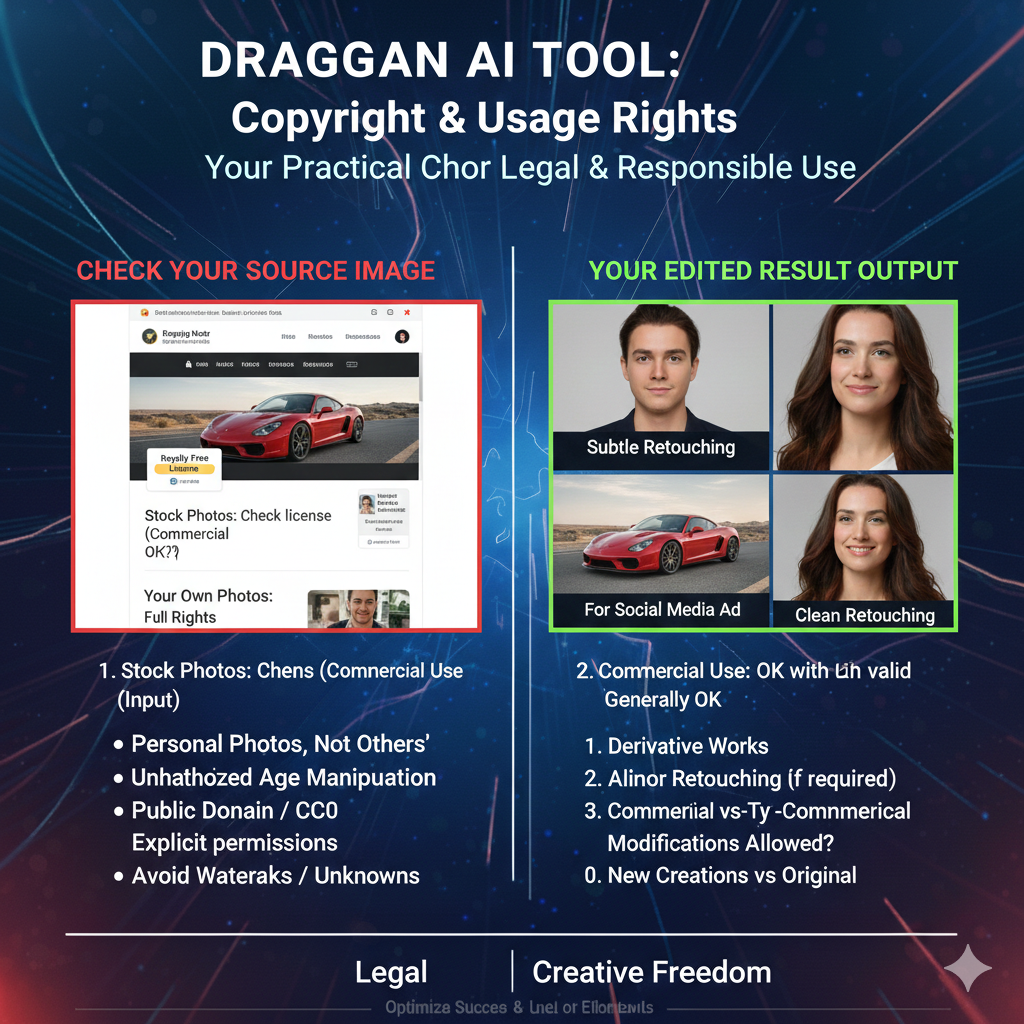
Avoid logos, celebrity photos, and brand assets without clearance: Editing a brand logo, product packaging artwork, or celebrity image with draggan ai can create trademark or publicity-right issues. If it’s not yours, don’t use draggan ai to publish altered versions.
Get model consent for portraits: If you use draggan ai on a real person’s photo, get consent to edit and publish, especially for commercial posts, ads, or affiliate blog thumbnails. draggan ai edits can look real, so treat it like professional photo editing.
Add an affiliate-style disclosure for edited visuals (when relevant): If draggan ai edits are used to demonstrate “before/after” or to market a product/service, label it clearly as edited. Keep the original file archived so you can prove what was changed if needed.
draggan ai tool: Pricing – Is It Free or Paid?
draggan ai tool is often described as “free” because many versions are based on open-source code or research demos. In practice, draggan ai tool can be free to access in some hosted demos, and draggan ai can also be free to run locally if you set it up yourself.
The “paid” part usually comes from the compute, not the tool name. If you run draggan ai tool on a cloud notebook with a paid GPU plan, or if a hosted platform charges for faster usage, then using draggan ai becomes paid through those services.

If you run draggan ai locally, you may not pay per use, but you’re paying indirectly through hardware (a good GPU PC) and electricity. That’s why for many beginners, trying draggan ai on a free demo first makes sense, then upgrading only if draggan ai becomes part of your regular workflow.
Some platforms may offer draggan ai tool-style editing inside a paid subscription bundle (AI image suite tools). In that case, you’re paying for convenience, speed, and a polished interface, not just the basic draggan ai idea.
For your blog, the simplest way to explain pricing is: draggan ai can be free to try (demos), free to run (self-host/local), or paid through convenience (hosted platforms and GPU services). This helps readers choose the cheapest path to start with draggan ai tool and the best upgrade path later
draggan ai tool open-source vs hosted tools (what “free” really means)
draggan ai tool is “free” in the open-source sense when you use the code yourself – you can run draggan ai tool locally without paying a subscription, but you still pay indirectly for your PC/GPU, setup time, and maintenance.
With open-source draggan ai tool, “free” does not mean “easy” – you may need Python setup, model files, and troubleshooting, and the user experience depends on which draggan ai repo or build you choose.
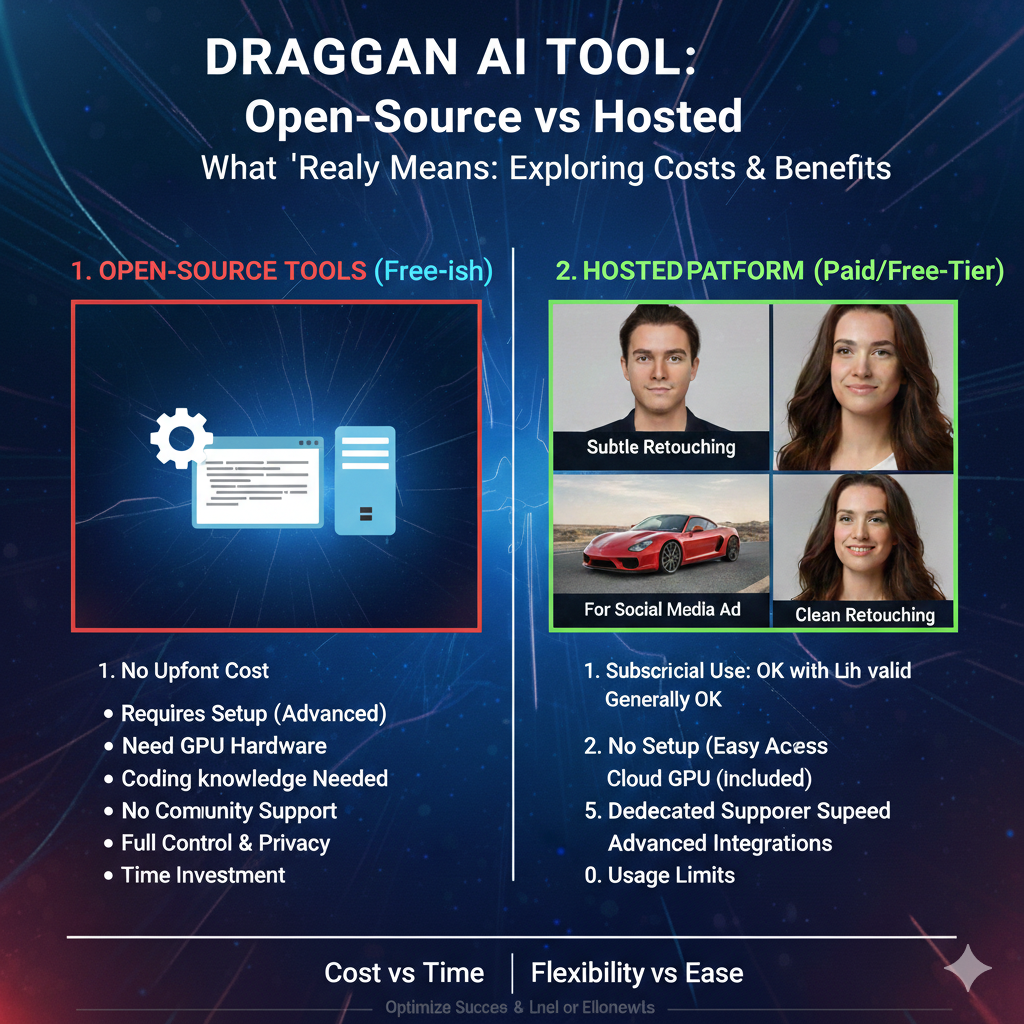
Hosted draggan ai demos (web apps, Spaces, cloud UIs) feel free because you can start instantly, but “free” usually comes with limits like slow queues, lower resolution, restricted features, or daily usage caps for draggan ai.
Paid hosted versions of draggan ai tool (or similar point-drag editors) charge for convenience – faster GPUs, higher quality exports, more stable performance, and fewer restrictions, so you’re paying to make draggan ai smoother and more reliable.
The simplest way to explain “free” to readers: open-source draggan ai = no subscription but you handle costs and setup, hosted draggan ai tool = easiest start but free tiers are limited, paid hosting = best experience when you use draggan ai regularly.
draggan ai tool: Best Alternatives (If You Need Faster or Easier Editing)
If you like the same “point-and-drag” style but want a quicker start, try a hosted draggan ai style demo on Hugging Face. These demos run in the browser and let you upload an image, add points, and edit without setup – basically the easiest way to experience draggan ai-type editing.
For the fastest “remove or replace anything” workflow, Adobe Photoshop Generative Fill is often easier than draggan ai tool because you can select an area and use a text prompt to add/remove content nondestructively. If your goal is object removal, background extension, or quick replacements, this can be faster than draggan ai point dragging.
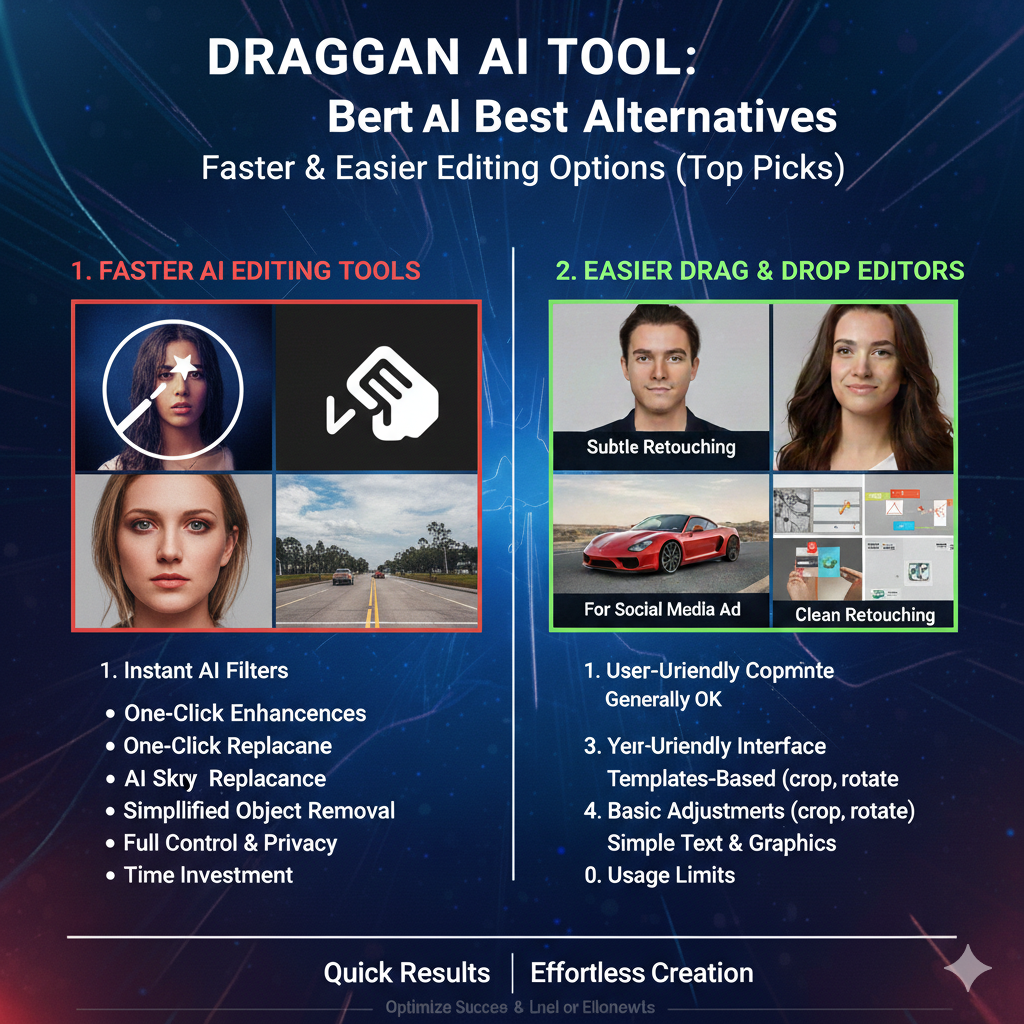
For quick cleanup and simple edits (especially for product photos), Clipdrop is a strong alternative when you don’t need the full control of draggan ai tool. Tools like Cleanup/Remove Background are designed for speed, so you can remove distractions in seconds instead of spending time placing points like in draggan ai.
If your content also includes video and you want an “all-in-one” creative suite, Runway can be easier than draggan ai tool for creators. It’s built around fast generation + editing tools for images/video, which is useful when draggan ai feels too focused on one specific edit style.
If you design in a UI tool and want edits inside your design workflow, Figma’s AI image editing tools (Erase/Isolate/Expand) can be more convenient than exporting to draggan ai tool. For layout work, quick removals, and expanding images to new aspect ratios, Figma can be a smoother “in-app” alternative to draggan ai.
draggan ai tool alternatives for background changes
If your main goal is background removal (cutout), draggan ai is not the fastest option – tools like remove.bg do one-click background removal and can also generate new backdrops, which is quicker than point-drag editing with draggan ai.
For Canva users, Canva’s Background Remover is a fast alternative when you want clean cutouts for designs and social posts. Instead of shaping the subject with draggan ai, you remove the background and drop the subject into new layouts instantly.
If you want both remove + replace background in a simple web workflow, Clipdrop Remove Background is a strong alternative. It’s built for quick product and creator edits, which can be easier than doing background-focused work with draggan ai.
For realistic background replacement (not just cutout), Photoshop Generate Background / Generative Fill is usually faster than draggan ai tool because you can replace a scene using prompts and generate multiple variations quickly.
If you want a mobile-friendly, fast background remover for product photos, Pixelcut Background Remover is a good alternative. Instead of using draggan ai for composition fixes, you can cut out the subject and place it on clean or styled backgrounds in seconds
draggan ai tool alternatives for face retouch and portrait edits
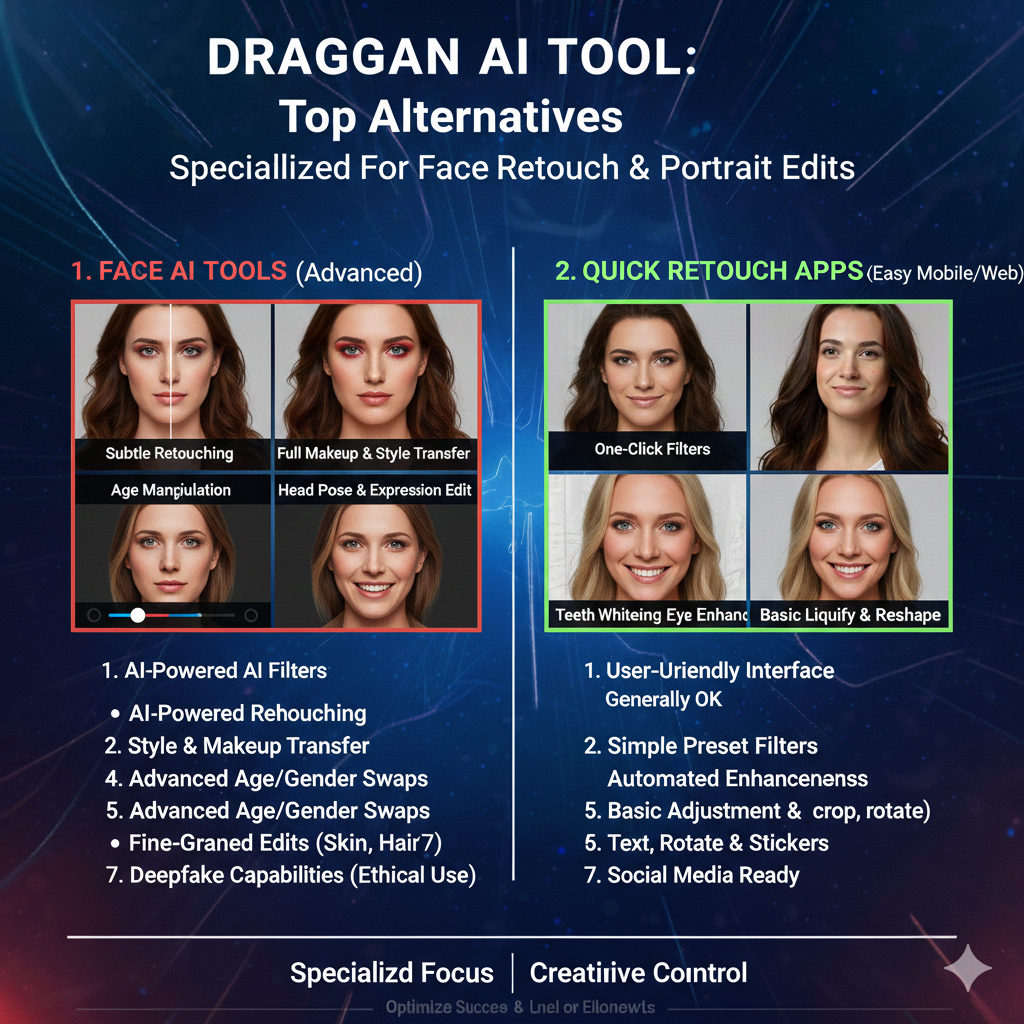
Adobe Photoshop Neural Filters (Smart Portrait, skin edits): If you want quick portrait retouch controls (expression, age, gaze-style adjustments) without placing points like draggan ai tool, Photoshop’s Neural Filters are a strong alternative for portraits.
PortraitPro (dedicated portrait retouch suite): When you need one-click face detection + sliders for skin, facial shaping, hair, and smile tweaks, PortraitPro is often faster than draggan ai for classic retouching workflows.
Facetune (mobile-first portrait retouch): If your audience edits selfies on phone and wants simple retouch tools (skin, face, portrait enhancements) with minimal learning curve, Facetune is easier than draggan ai for quick social-ready portraits.
Remini (face enhancement + unblur style upgrades): If the main problem is low-quality or blurry portraits, Remini is usually a better pick than draggan ai tool because it focuses on enhancement and restoration rather than point-drag reshaping.
Google Photos AI tools (fast touch-ups + unblur): For simple portrait improvements directly in your gallery app, Google Photos offers AI editing tools like Unblur and other edits that can be faster than opening draggan ai, especially for casual users.
draggan ai tool alternatives for product mockups
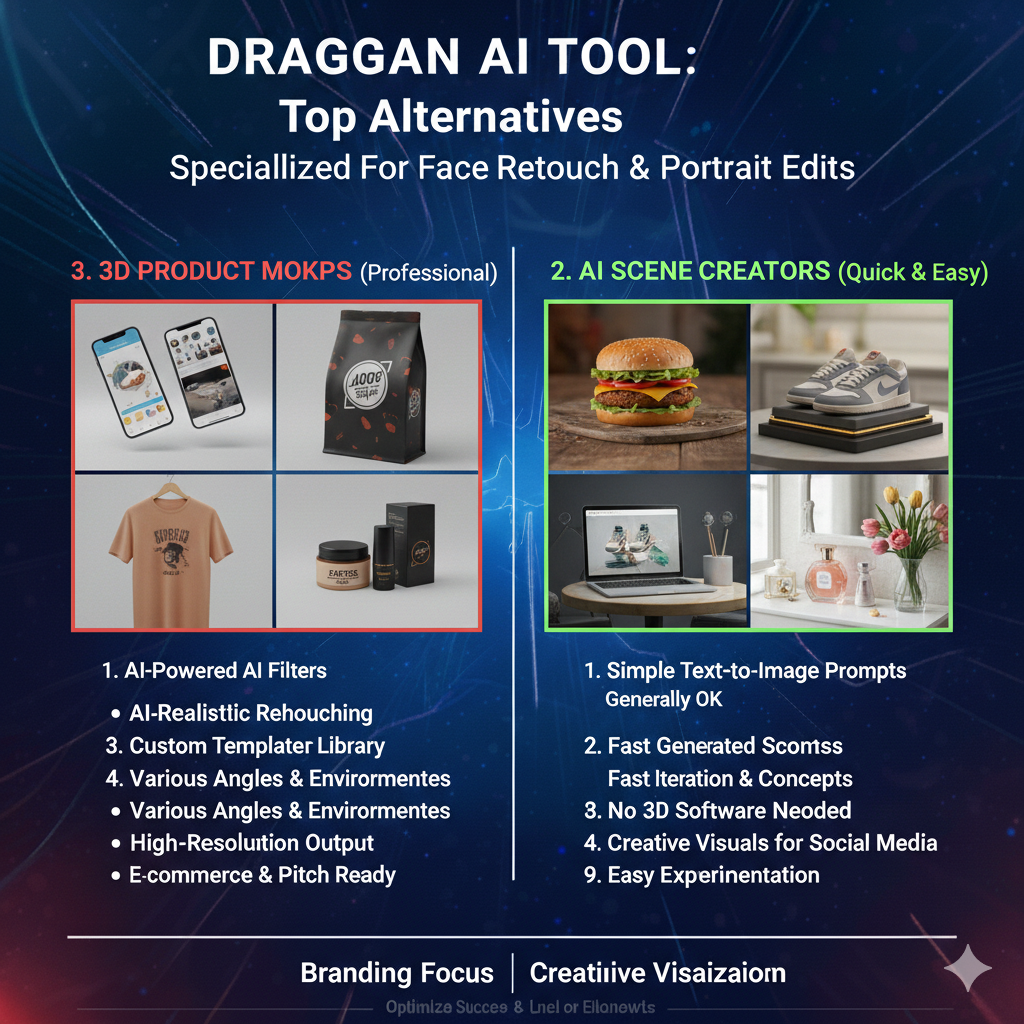
Placeit – If you’re using draggan ai tool for product mockups, Placeit is faster because it’s built for ready-made mockup scenes (apparel, packaging, devices, home decor) with drag-and-drop uploads.
Canva Mockups (Smartmockups inside Canva) – Instead of shaping a product photo with draggan ai, Canva lets you drop your design into mockups directly (t-shirts, mugs, packaging, tech, print) inside one workflow.
Artboard Studio – If you need more control than basic templates, Artboard Studio is a strong draggan ai alternative for mockups because it’s an online mockup generator with a large library and editable compositions.
MediaModifier – When your goal is quick ecommerce-style visuals (product + marketing creatives), MediaModifier is often easier than draggan ai tool because it’s optimized for fast mockup generation and exports.
Mockup Plugin for Figma (LS Graphics) – If you design in Figma, this is a practical draggan ai alternative for product mockups because you can place designs into high-res mockups directly from your design file.
draggan ai tool: FAQ (Most Asked Questions)
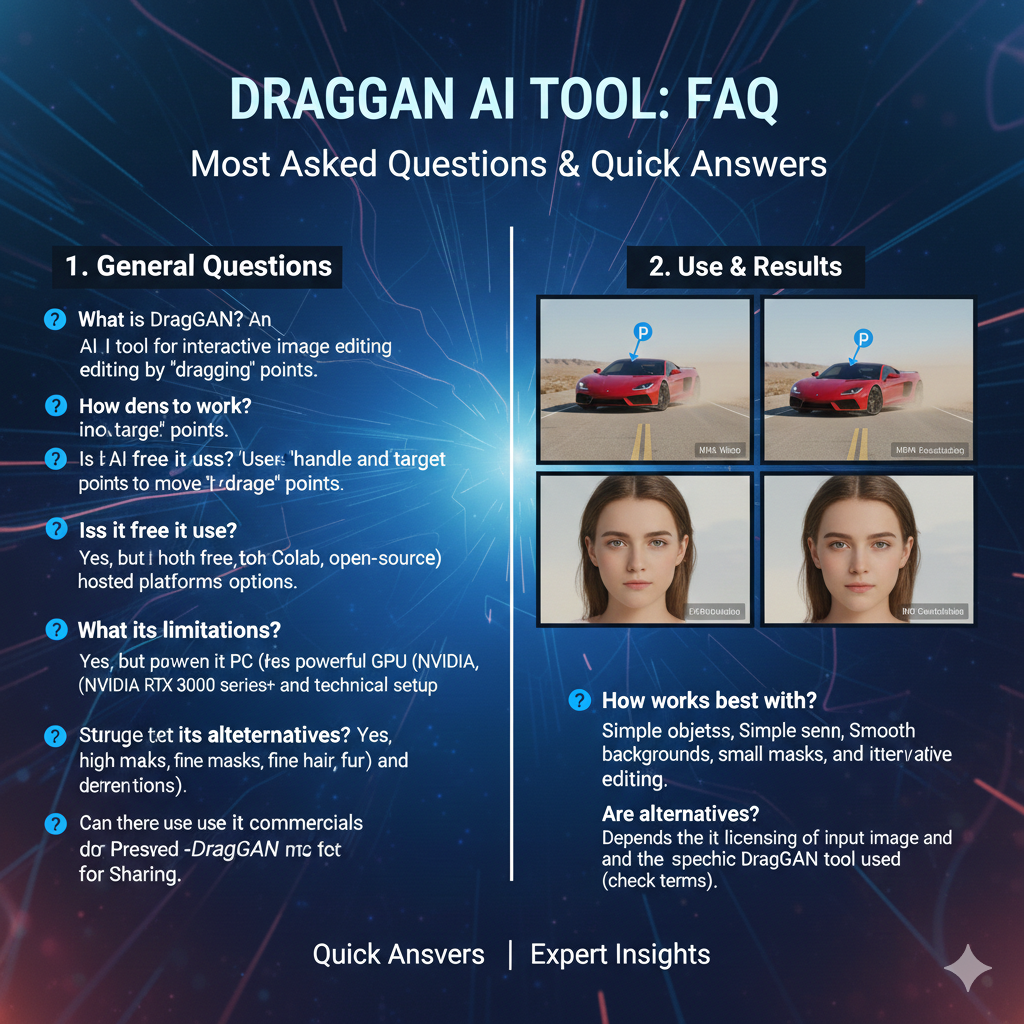
- What is draggan ai tool in simple words?
draggan ai is a point-and-drag image editing method where you place points on an image and drag them to reshape or reposition parts of the photo while trying to keep the result realistic. - Is draggan ai tool free to use?
Many draggan ai demos are free to try, and some versions are open-source so you can run draggan ai yourself. “Free” often depends on whether you use a hosted demo, cloud GPU, or local setup. - Can draggan ai tool run on mobile?
draggan ai tool is usually easiest on a browser demo from mobile, but full control and smooth performance are more common on desktop. For frequent use, most people use draggan ai on PC. - Does draggan ai tool work on real photos or only AI images?
draggan ai tool can work on real photos, but results depend on clarity and structure. Clean portraits and simple product photos usually give the best draggan ai results. - Why does draggan ai tool sometimes look unrealistic?
draggan ai tool realism breaks when you drag too far, place points in messy textures, or edit complex scenes. Small moves, multiple points, and keep points help reduce draggan ai artifacts. - What images are best for draggan ai tool?
High-resolution images with clear edges, simple backgrounds, and stable lighting are best for draggan ai tool. - What are handle points and keep points in draggan ai tool?
Handle points tell draggan ai tool what you want to move. Keep points tell draggan ai what should stay fixed to prevent unwanted shifts. - Can draggan ai tool remove backgrounds?
draggan ai tool is mainly for reshaping and repositioning. For background removal or replacement, other tools are usually faster than draggan ai. - Is draggan ai tool good for product photos?
Yes, draggan ai tool is useful for small composition fixes like straightening edges, adjusting angle, or creating variations from one product image. - What should I avoid doing with draggan ai tool?
Avoid extreme edits, identity manipulation, and editing photos without permission. Use draggan ai for realistic, responsible improvements.
draggan ai tool – can I use it on my phone?
Yes, you can use draggan ai tool on your phone if you access a browser-based demo (hosted app). In that case, your phone is only controlling the interface and draggan ai runs on the server/cloud.
But for serious editing, draggan ai tool is usually better on a laptop/PC because placing handle points and dragging precisely is harder on a small screen. The accuracy you get in draggan ai improves a lot with a mouse or trackpad.
Performance on phone depends on the demo. Some draggan ai demos load slowly, lag while dragging, or limit resolution, so the experience can feel inconsistent even if draggan ai technically “works.”
draggan ai tool: What It Is and Why It’s Trending
If you only need quick experiments (small face angle change, tiny object reposition), a phone is fine for testing draggan ai tool. For multi-step edits, keep points, and cleaner exports, draggan ai tool on desktop is the smoother workflow.
Best workflow: preview edits on phone using a draggan ai demo, then do final edits + export on desktop for better control and higher-quality draggan ai tool results.
draggan ai tool – does it work on real photos or only AI images?
draggan ai tool can work on real photos, not only AI-generated images. The key is that draggan ai tool needs a clear subject and strong structure to move points realistically.
draggan ai tool usually performs best on real photos that look “clean” – sharp focus, good lighting, simple background, and one main subject (portrait or product). These conditions help draggan ai preserve texture and edges during edits.
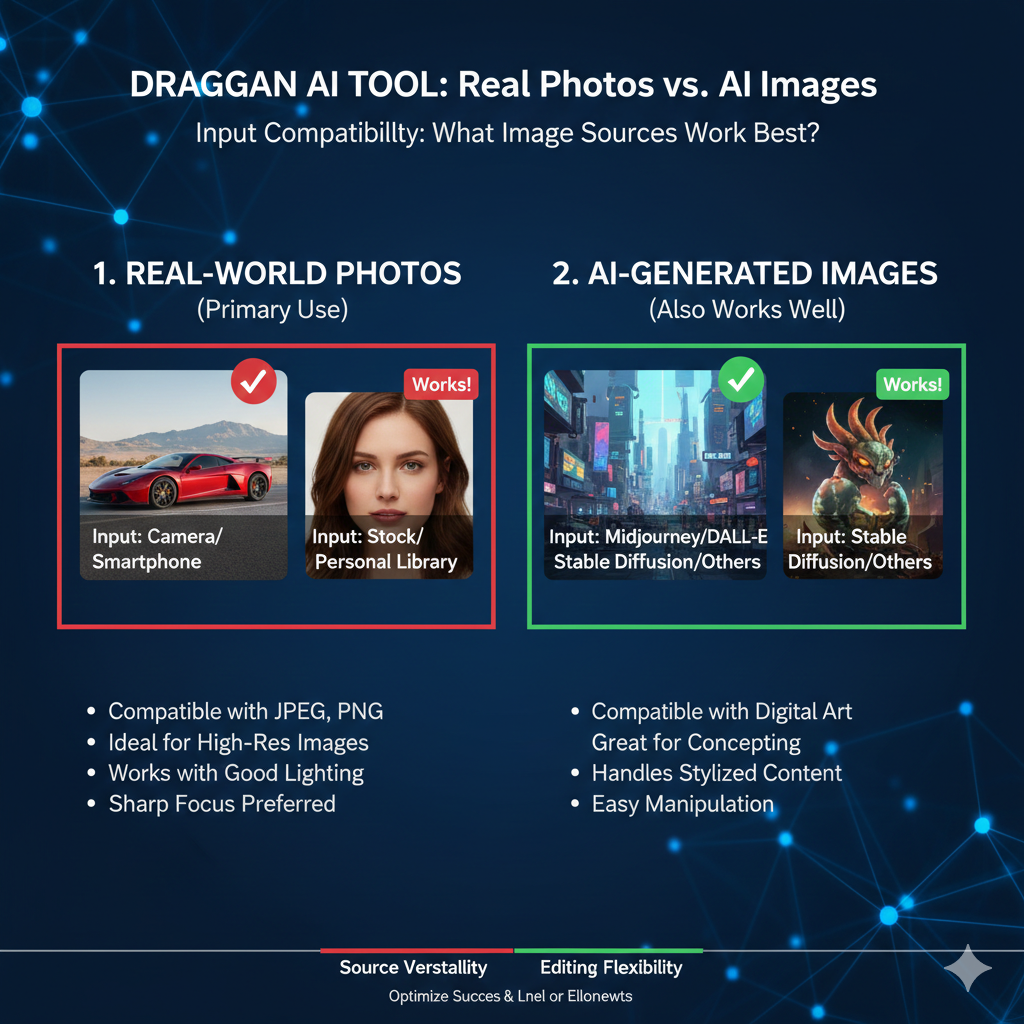
On real photos with messy hair, heavy blur, lots of noise, busy backgrounds, or multiple people, draggan ai tool can struggle. In those cases, draggan ai may shift unwanted areas or create artifacts because draggan ai can’t isolate the structure properly.
If you want reliable results on real photos, use smaller drags, place handle points on edges (not inside textures), and add keep points to lock important areas. This makes draggan ai much more stable on real photos.
So the simple answer: draggan ai works on both, but draggan ai results are more consistent when the photo is clean and the edit is physically realistic.
draggan ai tool – why edits look unrealistic sometimes?
draggan ai tool edits look unrealistic most often when the movement is too large. A big drag forces draggan ai tool to stretch shapes and textures beyond what looks natural, so you may see blur, warped edges, or strange skin and fabric patterns.
Point placement is another major reason. If handle points are placed inside messy textures (hair, fur, patterned cloth) instead of on clear edges, draggan ai tool may pull texture in the wrong way and create artifacts because draggan ai can’t “read” the boundary cleanly.
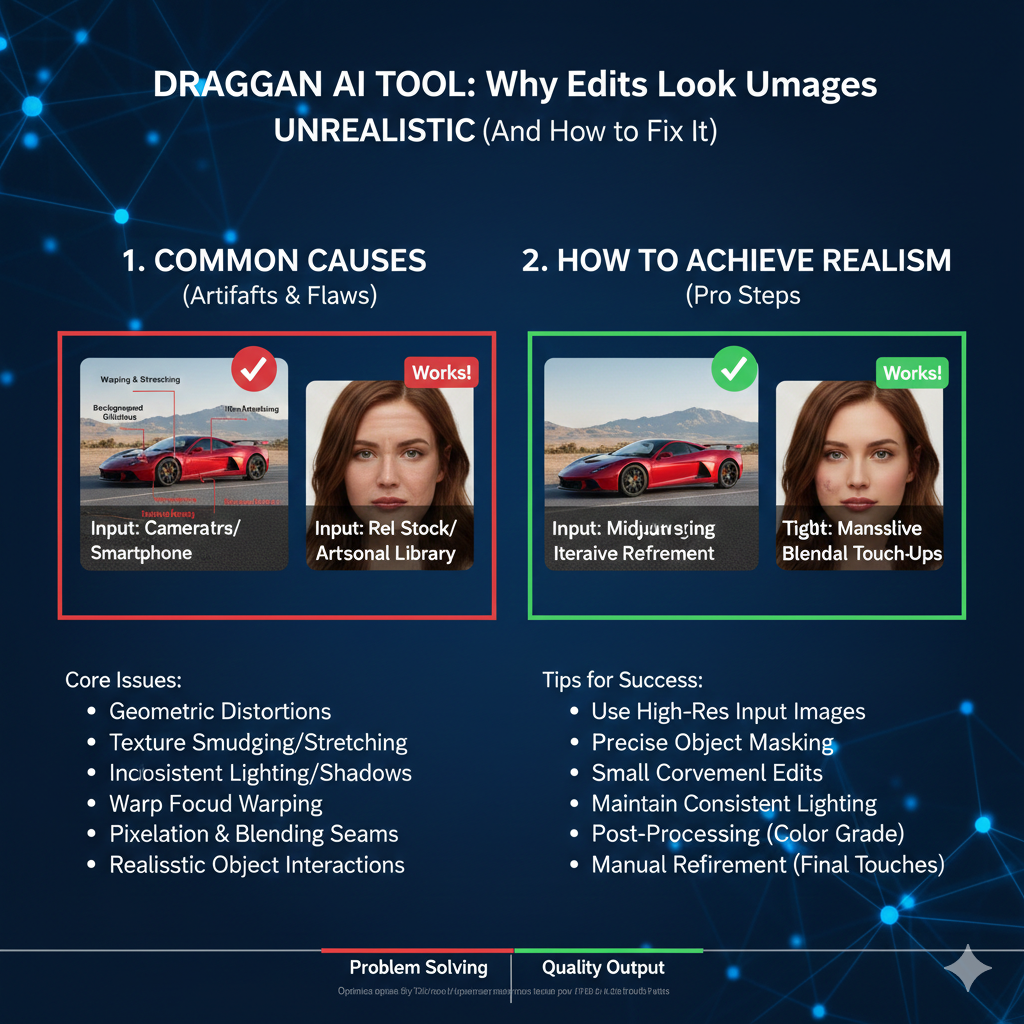
The image itself can cause problems. Low-resolution photos, noise, heavy compression, harsh shadows, or busy backgrounds reduce structure clarity, so draggan ai struggles to keep realism while moving points. When the structure is unclear, draggan ai “guesses” and that can look fake.
Missing anchors can make the whole scene drift. Without keep points, draggan ai might move nearby areas you didn’t intend, like shifting an eye while you lift an eyebrow or bending background lines while you reposition an object. Anchoring with keep points helps draggan ai tool stay focused and realistic.
The fix is simple: use smaller drags, more handle points, and keep points, then iterate. When you treat draggan ai as micro-edits and do multiple attempts, draggan ai tool results become cleaner and more natural.
want to learn more ai tools click here