Editing Tools

draggan ai tool: Full Guide to Features, Editing Workflow, and Use Cases

draggan ai tool: Limitations You Should Know draggan ai tool is strongest for small-to-medium shape edits, not extreme transformations. If you try to rotate a face heavily, stretch an object too far, or force a big pose change, draggan ai. can produce distortions because draggan ai is trying to keep the image “realistic” while the movement becomes unrealistic. draggan ai tool depends a lot on image quality and structure. Blurry photos, heavy noise, low resolution, and complex textures can reduce accuracy. In those cases, draggan ai may move the wrong region or create artifacts, because draggan ai can’t clearly identify boundaries and stable geometry. Busy scenes are difficult for draggan ai. If there are multiple faces, overlapping objects, messy hair, patterned backgrounds, or lots of tiny details, draggan ai may unintentionally shift extra areas while you edit one part. This is why draggan ai is more reliable on simple compositions. draggan ai tool is not a full replacement for traditional editing. Some tasks like perfect background cleanup, advanced compositing, professional retouching, or precise typography fixes still need manual tools. draggan ai is best used as a first-pass shaping tool, then refined if needed. Availability and consistency can vary. Different demos, repos, or hosted versions of draggan ai may behave differently, support different features (like keep points), or have different performance limits. So when you write your blog, explain that draggan ai results can change based on the setup and the type of image you test. draggan ai tool doesn’t work equally well on every photo category draggan ai tool works best on photos with clear structure, so it performs strongest on portraits, single products, and simple objects. In these categories, draggan ai can follow edges like jawlines, eyebrows, corners, and outlines, which makes the draggan ai tool edit look realistic. draggan ai tool often struggles more with crowded scenes. Group photos, busy street shots, and images with many overlapping objects can confuse what should move and what should stay fixed. In these cases, draggan ai may shift extra areas because draggan ai can’t isolate one subject cleanly. Hair, fur, and highly detailed textures can be tricky for draggan ai tool. If you drag points inside complex texture (curly hair, patterned fabric, fur), draggan ai might create odd stretching or texture artifacts. A better approach is to place points on edges and use small moves so draggan ai tool stays stable. Background-heavy images are another weak spot for draggan ai tool. If the background has strong straight lines (tiles, railings, text, grids) and you don’t anchor it, draggan ai can bend those lines when you edit the subject. Using keep points helps, but draggan ai tool still works best when the background is simple. The takeaway is not that draggan ai tool is “bad” for certain photos, it’s that draggan ai tool prefers predictable structure. If you choose the right category, use anchors, and keep movements small, draggan ai can look impressive. If you choose complex categories, draggan ai becomes harder to control. draggan ai tool artifacts, realism issues, and how to reduce them draggan ai tool artifacts usually appear as stretched textures, blurry edges, strange skin patterns, or warped background lines. These realism issues happen when draggan ai is pushed too far or when the image structure is unclear, so draggan ai guesses incorrectly while trying to keep the edit realistic. The easiest fix is reducing drag distance. In draggan ai tool, one big move often creates artifacts, but multiple small moves keep realism higher. If you see a problem, undo, drag only 20-30% of that distance, then repeat. This small-step method helps draggan ai stay stable and improves draggan ai realism. Point placement matters a lot. Put handle points on strong edges, not inside messy textures like hair, fur, or patterned cloth. When points sit on clear boundaries, draggan ai can move the shape cleanly. If the edit looks weird, reposition points closer to the true outline and try again with draggan ai. Use keep points to protect realism. Add keep points on areas that must stay fixed like eyes, nose bridge, teeth line, logo text, table edges, shadows, or background grids. Keep points act like anchors so draggan ai doesn’t shift the whole scene while you edit one feature, and this reduces draggan ai artifacts. Choose safer edits for photorealism. draggan ai looks most realistic when the change is physically plausible – small head tilts, mild smile adjustments, slight object repositioning. Extreme pose changes, big rotations, and heavy reshaping are more likely to break realism. If you stay within “natural” moves and iterate, draggan ai can produce clean results with fewer artifacts. draggan ai tool: Safety, Ethics, and Responsible Editing draggan ai tool is powerful because it can change real photos in a realistic way, so responsible use matters. Use draggan ai for harmless improvements like composition, product positioning, or creative design variations, not for edits that can mislead people about what’s real. Be careful with identity edits. With draggan ai, small changes to facial features, expressions, or angles can change how a person is perceived. If you use draggan ai tool on portraits, avoid edits that could manipulate identity, emotions, or meaning in a deceptive way, especially in sensitive contexts. Always respect consent and privacy. If the photo belongs to someone else, don’t edit and publish it without permission. This matters even more with draggan ai tool because draggan ai edits can look “real,” and viewers may assume the edited version is original. Think about context and disclosure. For marketing creatives, it’s fine to use draggan ai tool to improve product composition or create variants, but avoid edits that misrepresent the product (size, defects, performance). If an edit changes reality in an important way, disclose that the image is edited, even if draggan ai made it look natural. Follow copyright and usage rights. draggan ai tool does not give you ownership of a random image. Use images you own, have licensed, or have permission to edit.

draggan ai tool: Full Guide to Features, Editing Workflow, and Use Cases Read More »
draggan ai tool: How It Works, Key Features, and Real-World Use Cases

draggan ai tool for portraits and head pose changes draggan ai tool is especially useful for portraits because portrait edits often need small, believable changes. With draggan ai tool, you can guide a head pose shift by placing handle points on key areas like the jawline edge, cheek contour, eyebrow line, or hairline, then dragging slightly in the direction you want the pose to move. A common use is changing a head tilt. If the face looks too straight or too stiff, draggan ai can help you tilt the head a little to make the portrait feel more natural. Place 2-4 handle points along one side of the jaw or hairline and move them subtly. draggan ai tool works best when the move is small and done in a few steps. Another use is a mild head turn for a more dynamic look. For example, in thumbnails or profile photos, turning the face 5-10% toward the camera can make the image feel more engaging. With draggan ai, you can pull the cheek outline and jawline slightly, while using keep points on the nose bridge or one eye to prevent the whole face from drifting. draggan ai tool also helps correct awkward angles. If the chin looks slightly off-center or the face feels unbalanced, you can reposition the chin area, smooth the cheek curve, or adjust the side hair volume so the head pose looks cleaner. This kind of correction is hard with basic warp tools, but draggan ai can keep textures and shading more consistent. For the cleanest portrait results, use multiple handle points and add keep points on delicate areas like pupils, nostrils, and lip corners. This keeps the identity stable while you change the pose. When you guide it gently, draggan tool can give you a more flattering head pose without making the portrait look edited. draggan ai tool for product images and creative variations draggan ai tool works well for product images when you need small adjustments that make a big difference in how “premium” the product looks. Instead of reshooting, draggan ai helps you refine composition by nudging edges, corners, and key visual lines so the product feels more centered, balanced, and camera-ready. A common use of draggan ai tool is correcting alignment issues. If a label looks slightly tilted, a box edge looks uneven, or a shoe angle feels off, you can place handle points along that edge and drag gently to straighten it. With small moves, draggan ai tool can keep textures like leather grain, fabric weave, or packaging print looking more natural than simple warp edits. draggan tool is also useful for creating ad variations from one base image. You can move the product a little to create negative space for text, shift a handle, change the angle of a lid, or adjust the pose of a prop near the product. This makes draggan ai valuable for A/B testing creatives where you want multiple versions without changing the whole scene. For lifestyle product shots, draggan ai can help reposition supporting elements. Example: move a flower slightly closer to the candle, adjust ribbon placement, or reshape a small decorative element so it frames the product better. When you use keep points on the background, draggan ai tool keeps the scene stable while the product area changes. The best workflow is: make small edits, export a few versions, and compare performance. Use 2-6 handle points for clean shape control, and add keep points on shadows or table lines so they don’t shift. With this approach, draggan ai becomes a practical way to produce product image variations faster, without obvious “pixel warping. draggan ai tool for designers, creators, and marketers draggan ai is useful for designers because it saves time on small layout fixes that normally take a lot of manual masking and warping. When a subject is slightly off-position, draggan ai tool can nudge the pose, shift an object, or reshape an edge so the visual fits a banner, poster, or thumbnail layout without rebuilding the entire design. For creators, draggan ai tool helps make content more clickable with subtle edits that keep the image natural. A small head turn, a slightly wider smile, more open eyes, or a better centered object can improve the “first impression” of a thumbnail. Because draggan tool is point-guided, creators can test multiple looks quickly and choose the most engaging version. Marketers often need fast creative variations for A/B testing, and draggan ai tool supports that workflow. You can create extra negative space for copy by moving the subject left or right, adjust product angle to highlight a feature, or reposition props to frame the message better. Instead of producing totally new assets, draggan ai helps generate variations from the same base image. draggan ai also reduces dependency on heavy editing skills for teams with limited design bandwidth. A marketing assistant or founder can make controlled edits that look professional, then hand off final polishing if needed. In this way, draggan ai tool acts like a speed layer before full production edits. The best results for designers, creators, and marketers come from using draggan ai for realistic, physically possible changes and keeping movements small. Use multiple handle points for clean shape control, add keep points to stabilize background or branding elements, and export several versions. That’s how draggan ai tool becomes a practical content production tool, not just a demo effect. draggan ai tool: Full Guide to Features, Editing Workflow, and Use Cases draggan ai tool: Step-by-Step Beginner Tutorial draggan ai tool starts with choosing where you will run it. Most beginners use a browser demo or a hosted interface first, because it’s faster to test. If you plan to run locally later, you can still learn the workflow on a demo. The key is to understand the editing process of draggan ai before worrying about setup. Next, in draggan ai tool, load a clear image where the subject has strong edges and simple structure (portrait, product, animal

draggan ai tool: How It Works, Key Features, and Real-World Use Cases Read More »

draggan ai tool: What It Is and Why It’s Trending

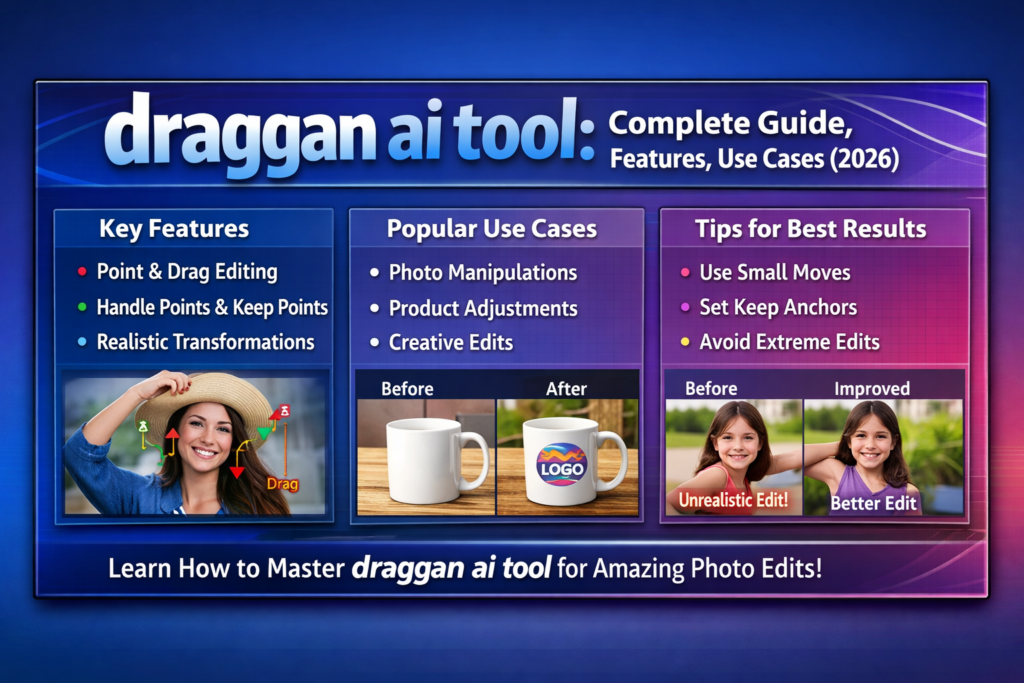
draggan ai tool: Complete Guide, Features, Use Cases (2026) 

draggan ai tool: What It Is and Why It’s Trending draggan ai tool is an AI-based image editing method that lets you move parts of an image by simply placing points and dragging them to a new position. Instead of “painting” changes like a normal editor, draggan ai tool tries to keep the image looking realistic while the shape or pose shifts, which is why people describe tool as point-and-drag photo manipulation. The reason draggan ai tool feels different from typical AI photo editors is control. Many tools give you a text prompt and a surprise result. Here, you decide exactly what to move and where to move it. That makes tool popular for creators who want fast edits without losing creative direction, like changing a face angle slightly, repositioning hair, or nudging an object’s shape while keeping the overall photo consistent. Another big reason draggan ai tool is trending is the “wow effect” in demos. When you see an edit happen in real time – moving features smoothly without obvious cut-paste artifacts – it instantly looks more advanced than basic warp tools. This visual clarity spreads quickly on social platforms because it’s easy to understand in seconds: point, drag, transform with draggan ai tool. draggan ai tool also aligns with what creators want right now: faster content production with fewer manual steps. People making thumbnails, ads, product visuals, or social posts often need small-but-important adjustments that normally require skill in Photoshop. With point-guided editing, tool helps a beginner test variations quickly, export, and iterate without hours of learning curves. draggan ai tool: How It Works, Key Features, and Real-World Use Cases Finally, draggan ai tool is trending because it sits in a sweet spot between “AI magic” and “editor control.” It’s not only about generating new images, it’s about editing existing ones with intention. As more AI tools flood the market, people are gravitating toward options that save time but still feel predictable – and that’s exactly the value ai tool promises when used on the right type of images. draggan ai tool vs traditional photo editors (what’s different) The biggest difference is how you edit. In traditional photo editors, you usually edit by selecting, masking, warping, liquifying, or manually retouching pixels. With draggan ai tool, you edit by placing control points and dragging them, and draggan ai tool tries to move the underlying image structure realistically instead of just stretching pixels. Traditional editors are powerful but skill-heavy. To get clean results, you often need practice with layers, masks, brushes, and non-destructive workflows. draggan ai tool reduces the learning curve because draggan ai tool is designed for guided edits – you guide the change, and draggan ai handles the complex transformation in the background. Speed and iteration are different too. In Photoshop-style editing, a small change can mean re-masking, re-warping, and re-blending. With draggan ai , you can test multiple variations quickly by dragging points in different directions, because draggan ai tool updates the result interactively and encourages quick trial-and-error. Control also looks different. Traditional editors give you full manual control, but that control depends on your ability. draggan ai tool gives you “intent control” – you specify what should move and where, and draggan ai tool attempts to preserve realism. For many users, draggan ai tool feels more predictable than text-prompt editing, but less granular than hand retouching. The limitations are not the same. Traditional editors can handle almost anything with enough time, even complex composites. draggan ai tool works best when the image has clear structure and the change is physically plausible. If the edit is extreme, the photo is low quality, or the subject is messy, draggan may produce artifacts, while traditional editors can still finish the job with manual fixes. draggan ai tool: How It Works (Point-and-Drag Editing Explained) raggan ai tool works by letting you choose specific points on an image and then dragging those points toward a target direction, so the edit is guided by your hand movement. Instead of directly stretching pixels like a warp tool, draggan ai tool attempts to shift the image in a way that keeps the scene looking natural, especially around edges, textures, and facial features. The core idea inside draggan ai tool is “handle points” and “target movement.” You place points on the area you want to change (like a jawline, eyebrow, car door edge, shoe tip), then you drag to where you want it to go. ai tool treats those points like constraints and updates the image to satisfy that movement while keeping the rest of the image stable. What makes draggan ai tool feel realistic is that it’s not only moving a small region – it’s trying to move the underlying structure of the subject. So if you drag a cheek upward, draggan doesn’t just smear the skin – ai tool tries to adjust nearby shape and texture so it still looks like a real face, not a rubbery distortion. While you drag, draggan repeatedly refines the result in tiny steps. This step-by-step updating is why you can stop mid-way, adjust your points, and try again. In practical terms, draggan ai tool encourages small controlled moves, because small moves usually keep the photo more believable and reduce artifacts. To improve control, many setups of draggan also let you add “keep points” (or similar constraints). These extra points tell draggan ai tool which parts should not move much, like keeping the eye in place while changing the eyebrow, or keeping the background stable while adjusting a product shape. With these constraints, draggan ai tool becomes more precise and the final edit looks cleaner. draggan ai tool uses GAN-based image manipulation (simple explanation) draggan ai tool is built on a GAN-style image model, which you can think of as a smart “image generator brain” that has learned patterns of real-looking images. Instead of editing pixels directly, draggan uses what the model learned about shapes, textures, lighting, and object structure to produce changes that still look realistic.

draggan ai tool: Complete Guide, Features, Use Cases (2026)  Read More »